Search website:

Q3 2026

Our quarterly wrap-up (white)


Q3 at a glance

Growing without the complexity.

Growth is exciting. But it can also expose the cracks in the way a business operates. The systems that worked when you were smaller may no longer work when transaction volumes increase. The provider who handled everything at the beginning may no longer cover what you need. And as new markets, people and processes are added, keeping everything connected becomes its own challenge. This quarter, we are looking at what happens when businesses outgrow the way they work and the practical lessons that can help make the next stage simpler.


Insights

You had one provider, now you have five.

When your finance function becomes harder to manage than it needs to be.

Welcome

Camelia Niță – Country Partner, Amesto Global Romania

As part of this next chapter, we were delighted to welcome Camelia Niță as Country Partner of Amesto Global Romania and the fifth Partner of Amesto Global, joining Armin Kirchner, Oonagh Hayes, Ger Holliday and Sims Tullos.

Armin Camelia bar 600

With 26 years of experience in global business services, Camelia brings a strong track record of building and leading high-performing teams. She previously served as Managing Director at TMF Group Romania, where she played a key role in building the business from the ground up, and later as Managing Director heading the Connected Tax Compliance business unit at PwC Compliance Services in Romania.

As our Co-Founder and Managing Partner, Armin Kirchner put it:

“This was an opportunity we were truly excited to embrace. Not only have we welcomed a firm with an outstanding reputation and shared values, but on a personal level, I am especially delighted to be working again with Camelia, whom I have known for over 25 years. It's a powerful combination.”

– Armin Kirchner, Co-Founder & Managing Partner

In the Press

Camelia on technology, tax and the future of corporate services.

We were proud to see Camelia featured in Economica.net, a prominent Romanian business publication, shortly after joining Amesto Global. In the interview, Camelia spoke about how the traditional model of reactive service delivery is being replaced by one built on technology, automation and real-time data analysis, driven in large part by the rollout of digital tax frameworks like SAF-T, e-Invoice and international Pillar Two rules.

economica

“Technology, artificial intelligence and automation are no longer an additional element, but factors that redefine the way services are delivered. Technology helps us do this at a scale and speed that we couldn't have achieved otherwise. But behind it is always human expertise.”

– Camelia Niță, Partner

Summer party in Bucharest.

To mark the occasion, colleagues from across our offices gathered for our summer party in Bucharest to welcome our new team. With so much of our work happening across time zones, getting together in person was a reminder of what makes this group special.

Great people, great energy and the perfect way to celebrate this next chapter. Here's to many more!

Romania team restaurant 600
Romania team restaurant B 600
Romania team restaurant C 600

At first, adding another provider can feel like the obvious solution. You enter a new market and find a local accounting firm. Your team grows, so you add a payroll provider. Transactions increase, so you introduce a new finance system.

The problem comes when those solutions need to work together. Different systems, processes, reporting formats and points of contact can make it increasingly difficult to keep everything aligned. Before long, someone on your team is spending valuable time connecting the pieces rather than focusing on the business itself.

Routine tasks such as bank reconciliations and data transfers can become increasingly manual, while reports may need to be checked and reconciled across different systems. When it is time to close the books, these inconsistencies can make it harder to get a clear and complete picture of the business.

Three questions to ask as you grow:

1. How much time are we spending managing providers? Consider the internal time spent coordinating, following up and resolving issues.

2. Can we see the full picture? Can you access consistent, detailed financial information without pulling together multiple systems and reports?

3. Where is manual work holding us back? Look at the processes your team repeats every month. These can often reveal opportunities to redesign or automate the way work gets done.


When fragmentation becomes a business problem

We saw this firsthand with a US-listed company that expanded across Europe through organic growth and acquisition. Multiple local accounting providers had created inconsistent reporting and workflows, limited visibility for headquarters and significant coordination work.

The solution was to create a more connected operating model, standardizing reporting, centralizing processes where appropriate and clarifying ownership while maintaining the local expertise required in each market.

The goal isn't simply to add another provider. It's to create a finance and operations model that works as one.

This pattern isn’t limited to finance operations. It shows up just as clearly when companies expand into new markets, like the US.

doing business in the us

When does selling in the US become operating in the US?

For growing CPG brands, it is not simply when sales reach a certain number. The shift usually happens gradually. At first, your US activity may look like products → customers → revenue, with HQ managing the business and the US simply another market. As activity grows, watch for these signals:

  1. Your US activity becomes ongoing: You are holding inventory, working with US-based partners, managing increasing order volumes or investing more consistently in the market. 

  2. Finance needs greater visibility: US sales are no longer enough. You need a clearer view of revenues, costs, cash flow, financial performance and how the US fits into group reporting.

  3. Responsibilities become more local: “HQ manages everything” becomes harder to sustain. You need clarity around who owns the US operation and what should remain centralized versus handled locally.

  4. Manual processes start to show their limits: As the number of stakeholders, reporting requirements, systems and providers increase, processes that worked during the testing stage can become bottlenecks.

The real indicator is not one specific milestone. It is when the US starts requiring its own operational infrastructure, rather than simply being managed as another sales market. Recognizing these signals early gives you more time to put the right infrastructure in place as the business grows.

Explore our US market resources here:

doing business in the us

Findable's next chapter: Growing and expanding from Norway to the UK.

Findable

Findable is a Norwegian technology company using AI to help property owners and operators make faster, better-informed decisions. After establishing its business in Norway, the company saw an opportunity to expand into the UK. As Findable prepared for its next stage of growth, it was looking for a partner that could make expanding into a new market as seamless as possible. The priorities were simple: one accountant, the same accounting system and a consistent approach across Scandinavia and the UK.

With an existing relationship with Amesto, Findable was able to carry that same approach into its UK expansion. Amesto brought together the expertise needed across markets, helping establish the UK operation while maintaining continuity in Findable’s financial and operational processes.

For Findable, that meant having the right foundation in place without creating another layer of complexity for its team. Instead, they could stay focused on their technology, customers and growing the business.

Looking ahead

Growth should make the next stage possible.

The businesses that scale smoothly are not the ones that avoid complexity. They are the ones that address it early, before it slows them down. If any of the signals in this issue sound familiar, that’s usually the moment to act, not wait.

Planning your next stage?

Our team

Making moves around the globe this summer.

Throughout this quarter, we have been talking about what it takes to grow across borders, and a big part of that is having the right people around you.

We experience that in our own way every day. With teams across Spain, Ireland, the US and Romania, staying connected across countries is simply part of how we work. So this summer, we put a slightly more literal spin on it with our global step challenge.

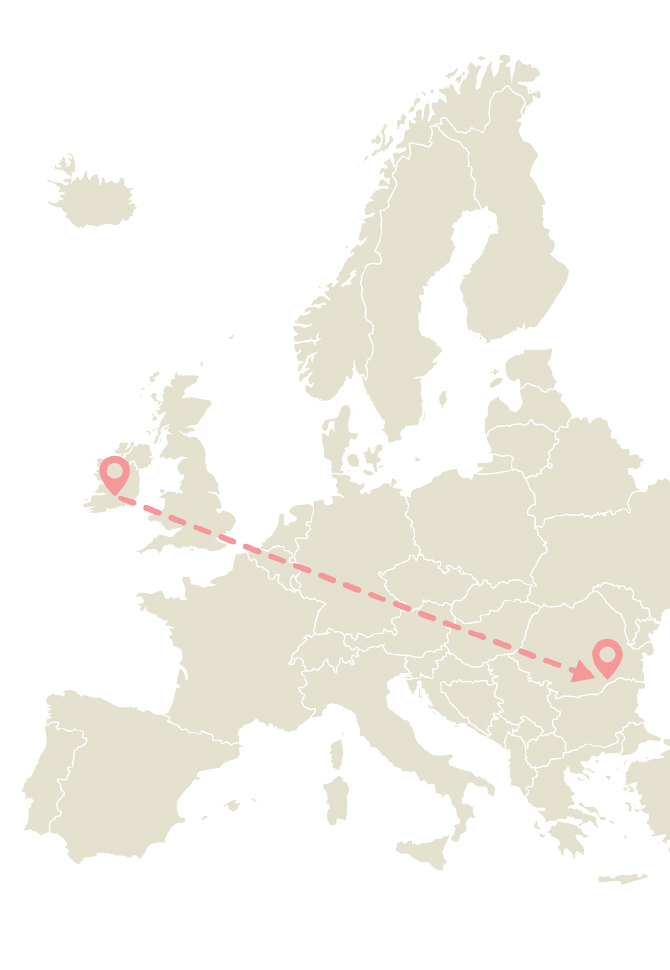
Together, we logged more than 5.4 million steps, covering 3,959 km, which is roughly the distance from Limerick, Ireland to Bucharest, Romania! And with an average of 8,075 steps per person, per day, it is safe to say our teams put some miles behind the challenge.

Together, we grow!


5.4

million steps


3959

km


4

countries


Steps map 670x970

Our team

Summer around the globe!

Officially saying goodbye to summer 2026, here's some highlights of what our team has been up to!

ONE AMESTO

Amesto leadership comes together in Barcelona.

Earlier this quarter, leaders from across the Amesto group came together in Barcelona for a leadership summit. It was a valuable opportunity to connect across markets, share experiences and align on the priorities that will help shape the next chapter of our growth. A good reminder that while we work across different markets and service areas in the Nordics, Europe and the US, we are all working toward the same thing.

#SIMPLIYINGLIFE


Here’s to a focused & productive autumn ahead!

– The Amesto Global Team


You can download a PDF version
of the quarterly update here:

happy-autumn-(slowed)

Keep in touch with us!

We’d love to keep you up to date with the latest Amesto Global news in our Quarterly Newsletter and occasional updates sent directly to your email. Please indicate your consent below, you can opt-out at any time.